
Whippet
playful / affectionate / calm
An affectionate sighthound who pairs bursts of speed with relaxed time at home.
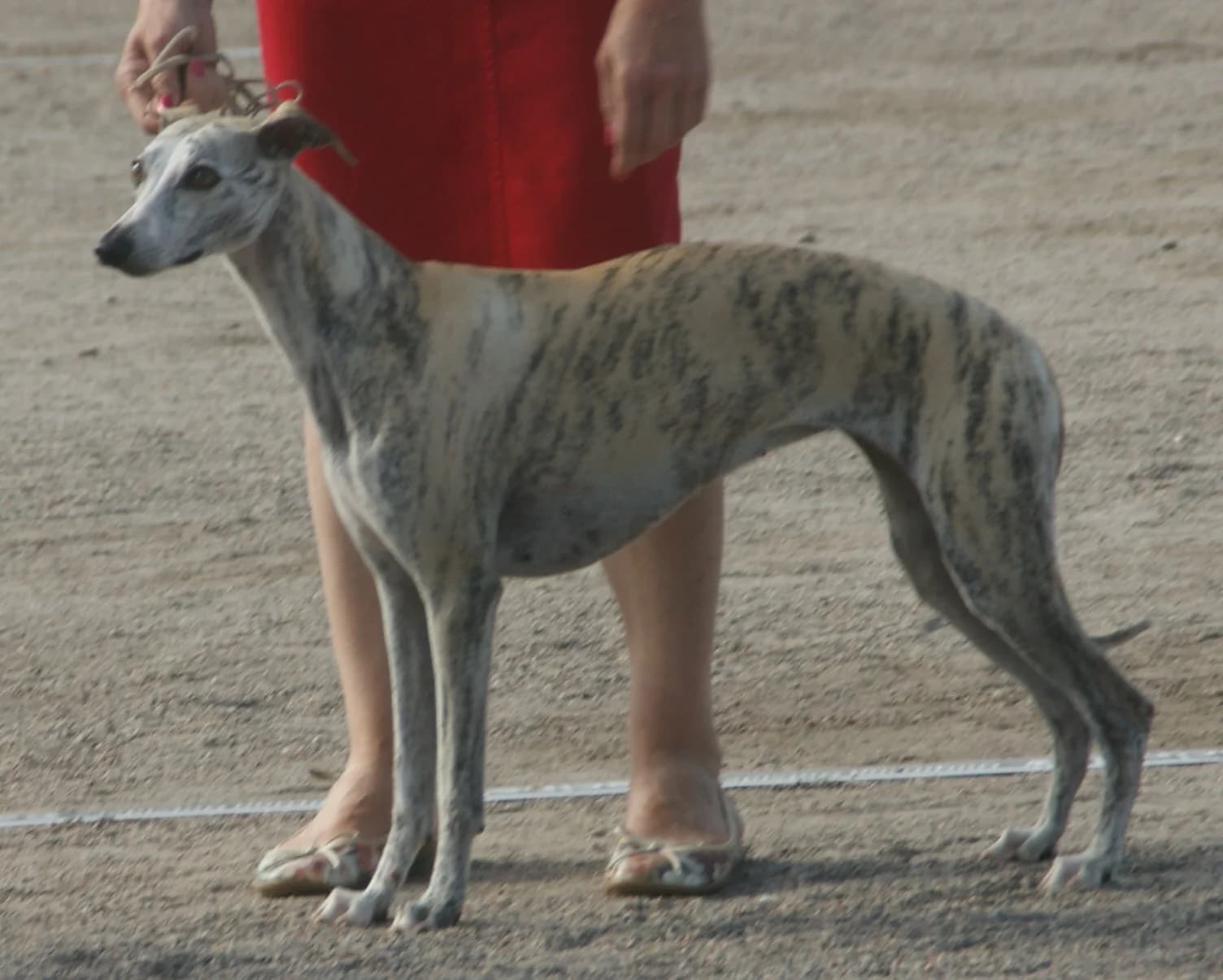
Photo: Canarian · CC BY-SA 4.0. Resized and cropped. Photo details

Distinct from Greyhound and Italian Greyhound; source breed identification is required. Also documented as: whippet.
The breed at a glance
- Official name
- Whippet
- Origin / registry attribution
- Great Britain
- AKC origin attribution
- England
- Group
- Hound Group
- Original purpose
- Coursing and racing
- Height
- 19-22 inches (male), 18-21 inches (female)
- Weight
- 25-40 pounds
- Typical lifespan
- 12-15 years
- Coat type
- Smooth
- Coat length
- Short
- Shedding
- Low
- Drooling
- Very low
- Barking
- Very low
- Grooming
- Very low
- Exercise needs
- High
- Mental stimulation
- High
- Trainability
- Moderate
- Children
- Very high
- Other dogs
- Very high
- Cats / small pets
- Individual assessment required; breed suitability unknown
- Apartment adaptability (editorial)
- Very high
- First-owner suitability (editorial)
- High
- Climate
- Cold sensitive
Measurements, coat facts, and trait ratings: AKC Whippet breed guide. Origin classifications can differ between registries; both attributions are retained where available. Apartment and first-owner ratings are editorial planning estimates.
Temperament & lifestyle fit
playful / affectionate / calm. These are general breed tendencies; upbringing, age, health and the individual dog matter.
- Energy and exercise
- High
- Grooming needs
- Very low
- Trainability
- Moderate
- Family compatibility: children
- Very high
- Apartment adaptability (editorial)
- Very high
Use these ratings to plan your routine, rather than to predict an individual dog’s behavior. Children need supervision and introductions to other pets need individual assessment.
Find breeds that fit your home, activity and care preferences · Understand our source ratings and editorial estimates
A history that shapes daily life
The Whippet developed in England as a smaller, swift sighthound associated with racing and coursing. Companion care should preserve safe opportunities for movement while respecting the individual dog’s stamina and prey drive.
History and breed background: AKC Whippet breed guide.
Coat care & everyday routines
A secure running area and careful introductions to small pets are important.
Reported coat colors: Black, Blue, Blue Brindle, Blue Fawn, Fawn, Fawn Brindle, Red, White, White & Fawn, White & Red, Red Brindle, White & Blue Fawn, White & Black, White & Blue, Cream, White & Blue Brindle, White & Red Brindle, White & Fawn Brindle. Color listings reflect the source registry and do not establish health, temperament, or show eligibility.
Plan daily activity and age-appropriate enrichment, a comfortable resting area, gradual alone-time training, and regular preventive care. Choose a routine you can maintain throughout the year.
Coat and care source: AKC Whippet breed guide.
Health conversations worth having
Discuss cardiac, eye, and hearing assessments. Individual veterinary advice is important for exercise and preventive care.
Screening listed by the source breed club
- Cardiac Exam
- Ophthalmologist Evaluation
- BAER Testing
Health screening does not guarantee an individual dog will be free of disease. These lists are not a diagnosis or an exhaustive account of possible conditions.
Health source: AKC Whippet breed guide · Parent breed-club health statement.
A realistic monthly care budget
$145–$295 USD per month · adult-dog planning estimate.
- Food
- $40–$70
- Routine veterinary reserve
- $60–$125
- Parasite prevention
- $15–$35
- Grooming & coat supplies
- $10–$25
- Treats, toys & replacement supplies
- $20–$40
Editorial U.S. adult-dog planning ranges, reviewed October 1, 2026. Routine veterinary care is averaged across the year. Local prices and individual health needs vary. Excludes purchase or adoption, initial supplies, insurance, emergency and specialist care, boarding, daycare, training classes, and pet rent. Sources inform care categories; these breed estimates are not supplier quotes.
AKC: lifetime dog-care costsASPCA: planning for pet-care costs
Sources & research status
- FCI breed nomenclature: Whippet · checked 2026-10-01
- AKC Whippet breed guide · checked 2026-10-01
- FCI official breed standard
- Data coverage, editorial estimates, and matching methodology
General breed tendencies do not guarantee individual behavior. Children need supervision; existing pets need careful introductions. Meet the dog and discuss individual health and care needs.